In the all-encompassing, 24/7 infotainment/social media bubble we live in, the things that shock, frighten and disgust us keep changing and mutating like the titular monster in the remakes of The Thing from Another World.(Guess what -- since the original and the remakes didn’t shock or disgust us quite enough, Hollywood wants to do it yet again… yeesh!)
While the most extreme depictions of violence and dismemberment elicit yawns in Anytown USA, millions of Americans gasp and groan at the latest Trump tweet, then, like rats in a conditioning experiment in Hell, keep swiping at their feeds to be shocked all over again.
In simpler times, screen time meant shelling out a quarter at the neighborhood theater for a newsreel, a short subject, and a feature (or even two B pictures if your gluteus maximus could handle it). The things that spooked audiences of the 1930s and ‘40s -- like Jack Pierce’s 1931 Frankenstein monster make-up -- would be hard-pressed to nudge the films into PG territory today.
Many people did not like how this scene ended.
Speaking of the original Frankenstein, that film might be the exception that proves the rule. The scene in which the monster inadvertently kills the the little girl who has befriended him by throwing her into the pond got the attention of several state film boards, which demanded that it (and another scene, in which Henry Frankenstein exalts that “Now I know what it feels like to be God!”) be cut. When Frankenstein was reissued to theaters the scenes were gone, and wouldn’t be restored until the 1980s.
Today there are no state boards demanding cuts to films, but most filmmakers don’t need censors or social media condemnation to deter them from killing off children in their movies -- that taboo is still going strong.
Eventually the classic Gothic monsters punched out on their time clocks, and the next shift -- the radioactive and space-traveling menaces of the atomic age -- punched in. There were plenty of monsters and horror elements in the new ‘50s & ‘60s breed, but most fans remember them for the thrills and not so much the chills (Them!, The Beast from 20,000 Fathoms, Godzilla, and their ilk notwithstanding).
The Duke, Malcolm and Esmeralda of Gravesend Manor
(broadcast in central Iowa, circa mid-1960s.)
When I was in elementary school, I was lucky to live within the range of two TV stations that broadcast creature features. On Friday nights we’d get mostly sci-fi from the ‘50s and early ‘60s, including things like Earth vs. the Flying Saucers, Invisible Invaders, World Without End, etc. (I wish I could remember the name of the show). Then on Saturday nights the horror host ensemble of Malcolm, the Duke, Claude and Esmeralda at Gravesend Manor would introduce the old Universal classics that were part of the Shock Theater TV package. (I was even lucky enough to get a signed photograph of the cast from a friend whose dad worked at the station!)
At first it was like pulling teeth to get my parents to allow me to stay up, but I think when they realized I’d do anything for viewing privileges -- clean my room, eat my vegetables, do my homework -- they wearily relented.
There was one incident that no doubt had them rethinking the wisdom of late-night horror shows. My parents were entertaining guests upstairs, while downstairs my brother and I, already in our pajamas, were watching a Twilight Zone re-run. It was the classic episode with William Shatner as the nervous airline passenger who can’t get anyone to believe that there’s a gremlin on the wing of the plane, dismantling the engine (“Nightmare at 20,000 Feet," 1963).
"Hey buddy, do you have an extra set of earbuds?
I want to catch the in-flight movie."
When Shatner’s character drew the window curtain aside to see the hideous thing’s face pressed against the glass, we both shot up the stairs, screaming at the top of our lungs. It’s testimony to my parents’ stoicism that the “Nightmare in the Basement” incident didn’t end the horror show privileges right then and there.
I would get plenty more adrenaline rushes from the late night shows. The classic Universal monsters on Saturday night were more fun than scary. I especially liked the monster “rallies” -- Frankenstein Meets the Wolf Man, House of Frankenstein, House of Dracula, and Abbott and Costello Meet Frankenstein -- that featured monsters galore and were like professional wrestling matches in some dark universe.
Interestingly, it was the Friday sci-fi creatures, not the Gothic monsters, that more often haunted my childhood dreams. Of course, the sci-fi Bs had their share of lame, low-rent monsters that no self-respecting kid could possibly think were scary (see my last post for some examples). But once in awhile, I’d be cruising along, munching my popcorn and enjoying a seemingly innocuous sci-fi programmer, and bam!, it would hit me with a scene that would have me shaking under the blankets later that night.
Some of the examples below I watched for the first time on the Friday night sci-fi show. I don’t think my parents had any idea how rough some of these movies were. After all, how bad could something called The Atomic Submarine be? If they’d known, I suspect the late nights would have been cut-off, and I might have grown up to be a stable, semi-respectable member of society. I’m so glad they never suspected a thing.
Disclaimer: The content below may not be suitable for all audiences, including, but not limited to, children, adults and other living things. The clips below are queued up to the scenes described in the text. Click the Play button if you dare!
When I first saw this movie, I handled the Rat-Bat-Spider monster with equanimity. But the scene in which one of the astronauts gets absorbed and digested by the giant amoeba monster stuck with me for some time. In retrospect, perhaps the most shocking thing was the filmmakers’ decision to use their “Cinemagic” process, in which the scenes on Mars’ surface look like a glowing, red-tinted cartoon made by someone on LSD. Experience Cinemagic for yourself by playing the clip below! (Interesting facts about the making of Rat-Batty can be found at my post “How to Make a Monster.”)
The Atomic Submarine (1959): These are the voyages of the expendable crew members
Several years before the original Star Trek series, a hard-charging Captain led his men into a confrontation with a menacing alien intelligence and managed to get them killed in a variety of gruesome ways. In addition to the horrifying deaths in this scene, the shadowy, minimal sets and the echoing voice of the spaceship’s occupant set up an uncanny, surreal atmosphere.
The Crawling Eye (1958): If you can keep your head when all about you are losing theirs…
This was my first introduction to headless corpses in the movies. The film teases the audience with a pre-titles scene in which a pair of mountain climbers haul up a fallen comrade dangling from a rope, only to find that he is **GASP!** missing his head, but it cuts to their reactions before we see anything. It delivers the goods midway in when rescuers find the headless corpse of another climber in a cabin. Even though the body is somewhat obscured by shadows, I had a hard time sleeping that night.
A number of characters are choked to death in this film, at first by something invisible, but the creatures obligingly make an appearance at the climax, taking shape as brains with antennae sitting atop whip-like spinal cord tails. I chuckled when I first saw the stop-motion monstrosities, but stopped when one whipped its spinal cord around its hapless victim’s neck. The sound effects as the creatures lay siege to the house are both comical and hideous. (Find out more about how the “fiends” were brought to life in “How to Make a Monster.”)
When Ridley Scott’s Alien first came out, many thought it was strikingly original, but fans of old-school sci-fi were well aware that it borrowed liberally from such films as It! The Terror from Beyond Space and The Planet of Vampires. I don’t know for certain that Alien’s facehugger was inspired by the “flying umbrella” in Not of This Earth, but there are disgusting similarities between the two creatures. While no ravenous worms burst out of anyone’s chest in this movie, the blood that slowly seeps out after the thing envelops the doctor’s head and he collapses, is enough to send shivers down anyone’s spine.
Way back in February 2020, I wrote about how grateful I was that my parents looked the other way when, as a pre-teen, I stayed up on Friday and Saturday nights to watch my beloved sci-fi flicks and Universal horrors.
I’m sure they had some mild reservations about my viewing choices, and they weren’t above occasionally using TV privileges as a disciplinary tool, but at the same time, the attitude clearly was “so he’s watching old reruns of Dracula and Frankenstein-- how harmful can that be?”
And most of the time, they were right. By the time I started collecting copies of Famous Monsters of Filmland, paging through the dogeared issues while eagerly awaiting the next installment of the local creature feature, I was too old to be frightened by the classic monsters. It was a lot of fun watching them chase their victims around creepy cobwebbed castles and retro laboratories, but really scary they were not.
The Jasons, Freddies, and Michael Myers had quite a few more years to wait before a more relaxed, “oh, whatever” society allowed them to slice and dice their way across movie and TV screens.
When I was a kid, I was allowed to watch my late night monster movies on one condition: I had to watch them in the basement.
By contrast, the classic monsters were born in an age of moral panic. In the 1920s, when Lon Chaney was thrilling audiences with his portrayals of The Phantom of the Opera and The Hunchback of Notre Dame in Universal’s first horror cycle, studio moguls were worried that too many thrills -- especially in the form of Hollywood sex and murder scandals, played against a backdrop of scantily clad flappers -- were turning uptight mainstream America off of their products.
Even as Universal was gearing up for its second horror wave featuring Frankenstein and Dracula, Hollywood was attending to its image problem by developing the Motion Picture Production Code to stake out what was permissible and what was not for U.S. audiences.
(The code was popularly known as the Hays Code, after Will H. Hays, first chairman of the Motion Picture Producers and Distributors of America.)
By the time the Bride of Frankenstein and Dracula’s Daughter were done strutting their stuff, the Code was in full effect, and Universal took a few years off from monster-making before the lure of profits brought the monsters back in the form of Son of Frankenstein in 1939. The Code’s finger-wagging lasted until 1968, when it was replaced by the Motion Picture Association ratings system, which is still in force.
It’s testimony to the genius of the folks at Universal that they were able to navigate the moral panics and the Code to produce a series of horror films that were long on atmosphere but hardly contained a drop of blood, mostly suggesting violence rather than splashing it on the screen. Even in today’s over-the-top entertainment landscape, the relatively understated Universal monsters are still revered by some and recognizable to almost everyone.
I was barely a teenager when the MPAA ratings were introduced in 1968. Along with a cartoon, theatergoers at the time were treated to a short introduction to the new system, which replaced the Code’s pre-censorship of content with a scheme that theoretically prevented children from being exposed to rough content that was increasingly becoming the norm. The very first letter ratings were:
Rated G: Suggested for general audiences.
Rated M: Suggested for mature audiences - Parental discretion advised.
Rated R: Restricted – persons under 16 not admitted, unless accompanied by parent or adult guardian.
Rated X: Persons under 16 not admitted. [Wikipedia]
By 1968, there was plenty of rough content to be protected from. It was the beginning of the of sex, drugs and rock-and-roll era, with a good amount of blood mixed in. Independent filmmakers were finding that almost any kind of transgressive, youth-oriented subject matter translated into box office gold, so theater and drive-in screens started filling up with hot stewardesses and nurses, drug-crazed motorcycle gangs and LSD trips.
On the horror front, Hammer Films had spent the past decade spicing up the classic monsters with heaving bosoms and technicolor blood. George Romero’s Night of the Living Dead upped the ante even further, introducing mainstream audiences to zombies munching on human body parts, forever changing what was acceptable to show in your neighborhood theater.
As with most revolutions, it only seemed like propriety and the conservative status quo had been toppled overnight. In reality, there were all kinds of rough and shocking scenes in movies leading up to the late ‘60s that made their way past censors, decency leagues and concerned parents, and eventually wound up on my cherished creature features.
The following are a few more examples of shocking scenes that I watched late at night, and paid for with fitful sleep and a few nightmares. They may not seem much by today’s horror standards, but each was a sort of building block leading to today’s “freedom” of expression. I survived them, and I’m better for it (I think).
At the time, Cosmic Monsters seemed like a perfectly innocuous big bug sci-fi movie, produced by the Brits on a nothing budget, and starring American C-list actor Forrest Tucker (who around the same time starred in such UK productions as The Abominable Snowman and The Crawling Eye).
The highlight of Cosmic Monsters features scenes of soldiers shooting at supposed giant insects, which consisted of insert shots of actual insects doing insecty sorts of things. However, two scenes grabbed my attention. In the first, protagonist Michele Dupont (Gaby André) gets tangled up in a giant spider’s web -- which of course had been done before, but in this version, the filmmakers cleverly integrated shots of Gaby with an actual spider jerking its legs around in real spider-time (not a lame-looking, slow-moving puppet), making for a more shuddery effect.
In the second, a large centipede-looking thing attacks a soldier and chews half of his face off -- needless to say, that got my attention. The only copies of the movie I’ve been able to find show only the aftermath of the giant bug attack, but my memory might not be so shaky after all. According to the movie’s IMDb page:
"The film was originally released in the UK in 1958 with an uncut 'X' certificate as 'The Strange World of Planet X (1958)'. It was then cut down to an 'A' certificate in 1960 and released as "The Strange World", and was missing some shots of Michelle trapped in a giant web and a dead man's face being eaten by an insect."
Speaking of getting caught up in a web of sci-fi intrigue, 20 years before Alien, Beast from Haunted Cave captured hapless humans and spun them up tight in huge webs in order to drain their lifeblood a little at a time.
The first time I saw the scene below, it made the hairs on the back of my neck stand on end (see my full review of Beast here). Beast from Haunted Cave was shot quick and cheap, but also delivered the stuff of real nightmares.
While The Monster of Piedras Blancas is a poor man’s Creature from the Black Lagoon, it is far from the worst Creature imitator. In spite of the low budget, the producers managed to get Jack Kevan, who had worked on the original Creature suit, to cobble together the Piedras Blancas monster from parts scavenged from other productions (see more about how the suit was created here). The end result is pretty effective.
Nevertheless, the filmmakers decided that they needed something more than a cool suit to lure jaded teenagers to the drive-in, so they gave their creature a predilection for **GULP** decapitating its victims before feasting on them.
This one is really rough, and in retrospect, it’s amazing that by the time I turned 13, I had seen Hypnotic Eye at least twice. The disturbing plot revolves around women in deep trances mutilating themselves with common household appliances and chemicals. Investigators find a common thread: they all had attended a stage hypnotist show and were volunteer subjects.
The film immediately gets down to business with one such incident. It’s perhaps all the more disturbing that, despite the low budget, the movie is well made, with more than a few stylishly suspenseful moments.
In addition to adding copious amounts of blood and boobs to cinematic vampire lore, Hammer Studios transformed Dracula from a smooth, refined nobleman who patiently lured his victims into his trap like a human spider, to a frenetic, bloody-eyed monster who could scarcely wait to put the bite on his prey.
The culmination of Hammer’s feral Dracula was Prince of Darkness, in which Christopher Lee plays the part with silent ferocity, stalking his unwary guests more like a wolf than a spider. The way in which the Count is resurrected was a big eye-opener for me, the first time I had seen a human being trussed up like a side of beef and sacrificed in such a horrific way.
My apologies for the infrequent posts on the blog -- I'm still in the middle of what has turned out to be a marathon move, hunkering down in a short-term lease apartment while going through all the paper work (and work work) of securing a more permanent abode. The tiny light I see at the end of this tunnel may be the shining light of future happiness or the great express train of life, but either way I'd be grateful for a quick resolution.
"Hmmm... do I really want to pack up all that stuff and move it?"
As I mentioned in an earlier post, packing up and moving all your Stuff (with a capital S) tends to focus the mind on priorities and what's really important in life. Lots and lots of stuff weighs down your body, your freedom, and your soul. After packing the umpteenth box with books and dvds, I've developed a much better appreciation for the great digital "anywhere, anytime, any device" revolution. Is it really the package -- the book, the disc -- that's important, or the content? Now, if only the content providers and the distributors could all just get along in a great, happy circle of cooperation and profit, while at the same time providing us needy consumers with reliable, stable, high speed access… what a wonderful world that would be! (On the other hand, as long as companies like Apple conspire with publishers to keep e-book prices high, and owners keep threatening to pull content from distributors like Netflix to wring that last penny out of their "intellectual" property, physical media will still be with us… and we'll continue to box it up and move it out.)
Another benefit of moving is that it motivates you to re-examine all those pesky entertainment/media subscriptions that seemed so necessary at the time, but like guests who've overstayed their welcome, are no longer charming and keep raiding your fridge and wallet for every last nickel and crumb. We started out subscribing to basic cable with the local monopoly, got tired of the constant price increases, then went with DIRECTV, and quickly got tired of the vast content wasteland that that service delivered for a premium price. I had long since given up on the shouting, blathering, talking heads of the so-called "news" outlets, and found myself only watching baseball and the occasional TCM flick for DIRECTV's hefty price. Canceling hundreds of channels of nothing seemed like a no brainer.
"You will subscribe to DIRECTV, you will watch it,
and you will enjoy it!"
The only catch is, DIRECTV is harder to get rid of than a surly, 800 pound freeloading house guest. When I called to cancel, the customer (dis)service rep wanted to grill me about why I was taking such a drastic step. He was incredulous that anyone would willingly cancel their obviously superior service. But that was not the end. Since that fateful call, I've gotten numerous call backs from similarly incredulous customer reps wanting me to rethink and/or explain this clearly suspicious, un-American behavior. When I finally told one of them off and demanded that they stop harassing me (and to take my phone number out of their data banks), the vaguely threatening "We're sorry to lose you!" emails started up.
As if that weren't enough, they sent me a puzzle box in the form of a DVR recovery package with a pre-printed address label. The instructions clearly directed me to include the remote and the power supply along with the unit or face severe penalties, but of course, there was no room for them in the box, so I had to use an x-acto knife and my ingenuity to get them all in there. Now, I'm waiting for the "destruction of and/or misuse of DIRECTV shipping materials" charge to show up on my final bill.
"I'm sorry sir, cancelling your subscription is not an option."
No doubt, this year or next will see the introduction of the "Early cancellation consumer terrorism" act in Congress, written by corporate lawyers and dutifully passed and signed into law by the chuckleheads and lackeys of Washington, D.C. I expect to be hauled off to a re-education camp (if I'm lucky!) to have my brain re-wired so that I can better appreciate the cornucopia of infotainment options that America's captains of mass communications have so laboriously developed. (When they come for me, I hope I'll be able to summon the same courage as Number 6: "I am not a DIRECTV account number. I am a person. I will not make any deals with you. I've resigned. I will not be pushed, filed, stamped, indexed, briefed, debriefed or numbered. My life is my own. I resign.")
Until then, I will peruse some of the more interesting and esoteric selections from Netflix instant watch, one subscription that I've kept. I know many people, especially those who want to see the latest blockbusters the moment they come out on video, have excoriated Netflix for its woeful instant watch catalog, but for someone of my eccentric and discriminating taste in film and television, instant watch is like Forrest Gump's box of chocolates. From Spanish language comedies to obscure British mysteries to classic TV from the '40s, '50s and '60s, Netflix rewards the open-minded viewer with an eclectic and vintage smorgasbord of entertainment and information, and all for a few measly bucks a month.
Recently, I discovered that season one of One Step Beyond from 1959 is available on Netflix instant. From an early age I gobbled up every book I could get my grubby little hands on that dealt with ghosts, flying saucers, ESP, and assorted other paranormal phenomena (no doubt stimulated by all the creature features I watched on the fuzzy black and white television). I read everything of Brad Steiger's that I could find, and then voraciously consumed ghost hunter Hans Holzer's books. Later, I got deep into UFO lore, with authors like physicist Stanton Friedman and Kevin Randle convincing me that where there was smoke there was probably fire with regard to alien visitation. These authors described a world, supposedly a real one, that was infinitely more varied, exciting and intriguing than the sleepy little midwestern college towns that constituted my world as a kid.
So, years later when I discovered episodes of One Step Beyond on videotape, I was immediately hooked. The series, which debuted in January, 1959, featured dramatized stories of true-life paranormal events. The series' host, suave, cultured John Newland, was almost the antithesis of gravelly-voiced, chain-smoking Rod Serling, whose Twilight Zone debuted that same year. Newland was smooth and confident and almost insouciant at times, telling viewers,
"What you're about to see is a matter of human record. Explain it? We cannot. Disprove it? We cannot. We simply invite you to explore with us the amazing world of the unknown, to take that … One Step Beyond …"
"We invite you to explore with us the amazing
world of the unknown..."
One Step Beyond ventured into nearly every aspect of paranormal phenomena with its 30 minute dramatizations: ghosts, out-of-body experiences, telepathy, telekinesis, precognition, doppelgangers, possession, transcendent visions, you name it. And like The Twilight Zone, it featured up and coming actors and actresses who would soon become household names, as well as some of the very best character actors around: Cloris Leachman, Charles Bronson, Christopher Lee, Louise Fletcher, Robert Blake, Warren Beatty, Mike Connors, Elizabeth Montgomery, Donald Pleasence, etc.
The series lasted three seasons, from 1959 - 1961. The show was a little before my time -- I don't remember watching it when it was first broadcast, and I doubt my parents would have let me watch it at that young age. It was much later, in the '90s, when I discovered some of the series' "classic" episodes on tape. A few years ago I bought Mill Creek's The Very Best of One Step Beyond with 50 of the series' 97 episodes, but was disappointed like many others to find that some of the discs were unplayable. So kudos to Netflix for securing the first season for instant watch (and I'm hopeful they'll soon add the other seasons).
The show was long on atmosphere, featuring tales of ordinary people reacting to bizarre events. As in any series, there are some snoozers and clunkers in the mix, but the best episodes are poignant psychological studies that evoke a sense of wonder (and some chills) at the incredible variety and mystery of life. They also provided an opportunity for some very capable actors and actresses to really show their stuff.
Condemned prisoner John Marriott (Alfred Ryder) gets one
last shot of brandy before the execution.
Case in point is episode 11, The Devil's Laughter. This is one of the very best episodes of the entire series, partly because of the incredibly strange nature of the "true" story, but mostly due to character actor Alfred Ryder's tour-de-force performance. Ryder plays John Marriott, sentenced to hang for the passion murder of his girlfriend. In the hours leading up to the hanging, Ryder/Marriott is all tics and bug eyes and breathless moaning. As he's offered a last brandy by the warden in a tin cup, he gulps it down, then grabs the bottle from the warden's hand and downs that too, grinning maniacally with this little act of defiance. On the steps of the gallows, he bucks and sways in panic and desperation. Unlike so many stoic condemned men in Hollywood movies, this is exactly how you would expect a real person to react in such a situation.
When the noose breaks, and he wakes up in his cell a new man, the contrast to the old panicky Marriott couldn't be greater. He boasts that when the executioner fixed the hood over his head, something whispered in his ear and showed him exactly how he was going to die -- at the feet of a lion -- and nothing and no one will be able to change that fate, or kill him in any other way, no matter how hard they try. When the second hanging fails because the platform won't fall despite numerous attempts, the cackling, ebullient Marriott is released from prison by order of Parliament -- two execution attempts is suffering enough. With the Devil on his side, he figures he's beaten the world. After all, how likely is he to die at the feet of a lion in the middle of Victorian London? Indeed, another attempt to kill him, this time with a gun, fails as spectacularly as the hangings. But the supercilious small-timer will still keep his date with death…
Murderer John Marriott proves to be a hard man to kill.
Although Ryder was also a veteran of radio and the stage, if you're a boomer who watched any TV in the '50s, '60s and '70s, you will probably recognize his distinctive features. He seemed to be all over the dial, constantly popping up in the TV shows that I loved as a kid: The Outer Limits, Star Trek, The Alfred Hitchcock Hour, Voyage to the Bottom of the Sea, The Wild, Wild West, The Man from U.N.C.L.E., The Invaders and many more.
Note: I've decided to expand the repertoire of this blog to include anthology TV shows like One Step Beyond, especially now that many of these cathode ray tube classics are available online (and these episodes are, after all, nicely crafted short films). Look for more "Fabulous, Fantastic TV Shows of the '40s, '50s, and '60s" right here on this blog. (Like Fantastic Faceless Foes, it will be an "irregular" feature, i.e., as I get the time and inclination. But stay tuned … there's more to come.)
The great Roger Corman, master of the quick and cheap exploitation picture, producer and distributor of hundreds of films, and mentor to a whole generation of influential filmmakers and actors, passed away on May 9th of this year at the age of 98.
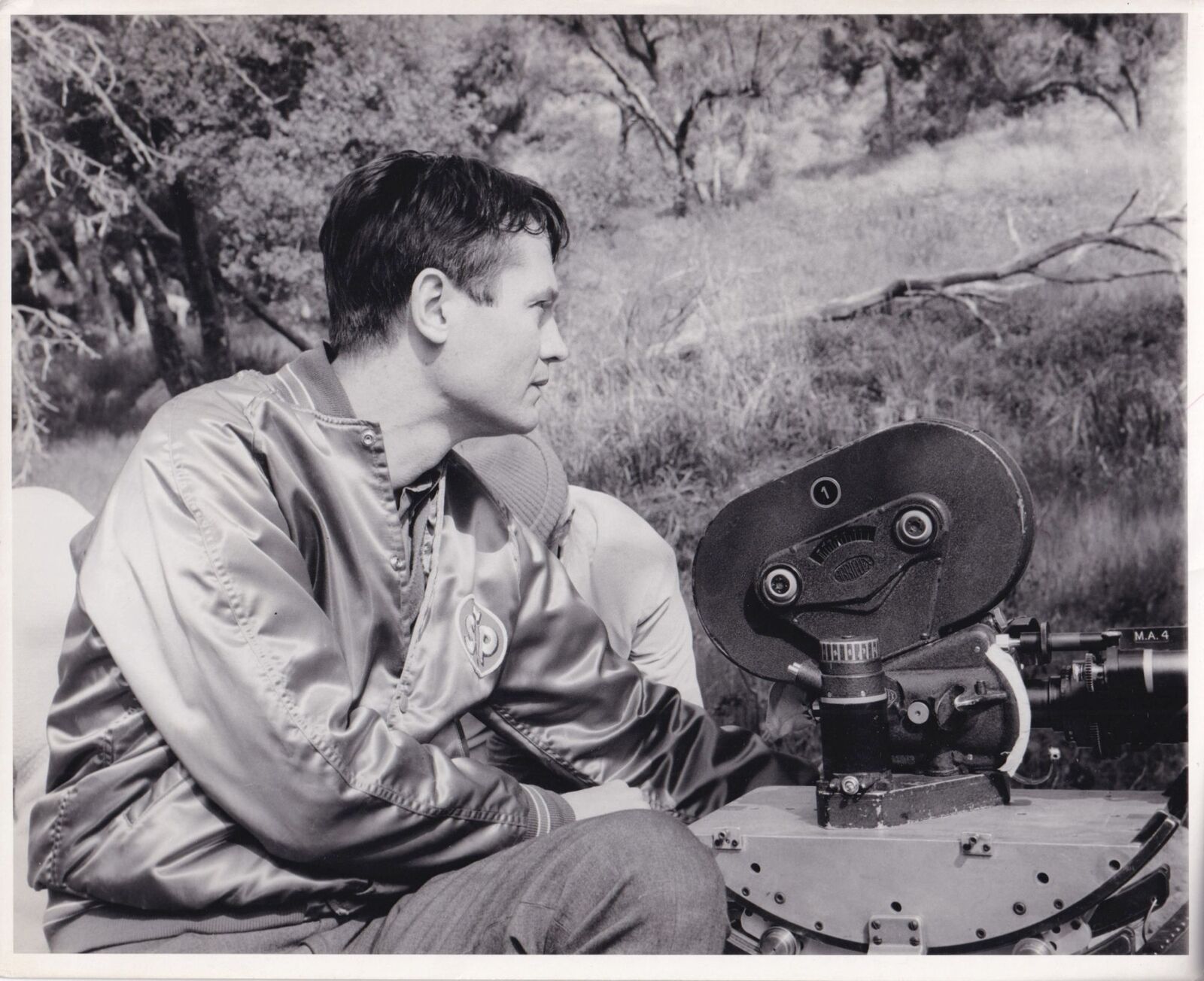
Roger Corman on the set of The Trip (1967; Wikimedia Commons)
Rather than duplicate a career summary that you can get in a thousand different places on the web, I thought I’d honor Roger by reminiscing about his influence on this particular Monster Kid growing up in the midwest in the ‘60s and ‘70s.
I’ve told this story before, so bear with me if it feels like a case of deja vu all over again. Living in central Iowa in the mid-‘60s was Monster Kid Heaven. On Friday nights, one of the Des Moines TV stations ran sci-fi movies, introducing me to such thrilling delights as The Beast from 20,000 Fathoms, Earth vs. the Flying Saucers and the like (there were also duds like Teenage Monster or Giant from the Unknown, but being a resilient kid, I took the bad with good and was grateful that my ever-suffering parents allowed me to stay up to watch this stuff at all).
Then on Saturday nights, my local station presented Gravesend Manor, which was hosted by the wacky ensemble cast of Malcolm, the butler of the manor, his vampire buddy the Duke, cigar-chomping Esmeralda, and Claude, the mute, put-upon assistant. Gravesend Manor was the icing on the weekend monster cake, showing selections from the Shock Theater package featuring the classic Universal monsters, with a few non-horror mysteries and thrillers thrown in (it was always a letdown when the familiar monsters failed to make an appearance, but on the up-side, anticipation would then build for the next week).
To say the least, the one-two, Friday-Saturday punch of sci-fi thrills and Universal monster chills made a deep mark on my very impressionable mind. After all, here I am, decades upon decades later, and I’m still revisiting these films and posting about them.
I didn’t realize it at the time, but Roger Corman (and to give credit where it’s due, frequent writing collaborator Charles B. Griffith) had crept into my young head and were occupying it every bit as much as my beloved Universal monsters. I’d be lying to say I was impressed with every Corman film that showed up on Friday nights. I wouldn’t become familiar with the term “production values” until much later, but I knew cheap when I saw it.
These weren’t what you'd call polished pictures, but they still made an impression.
For instance, the giant mutated crabs of Attack of the Crab Monsters (1957), with their lidded googly eyes and frowny faces, look like live-action cartoons. But there’s something very un-cartoony about the premise of giant irradiated crabs not only consuming human beings, but absorbing their consciousness and using that ability to lure more unsuspecting human prey into their maws (or whatever it is crabs eat with).
Okay, so giant crabs throwing their voices like ventriloquists, imitating the people they just ate for lunch is ridiculous on its face, but also creepy as hell. And then there’s the other doom facing the scientists -- the island they’re stranded on is quickly breaking up and falling into the sea. Even though the idea is wacky in the extreme, it still somehow resonated.
“The Most Terrifying Horror Ever Loosed on a Shuddering Earth!”
“A horror film has got to have something in every single scene, so the audience never has a chance to sit back for more than a moment. These films are constructed very carefully -- you do have to give people a few moments to relax and then come back into it. My main goal in Crab Monsters was to integrate tension into each scene, leading to the horror conclusion.” -- Roger Corman, The Movie World of Roger Corman (edited by J. Philip di Franco, Chelsea House, 1979)
Speaking of approaching Doom, it was Roger Corman who introduced 10-year-old me to the Apocalyptic variety via Last Woman on Earth (1960), an ultra-cheap fantasy-melodrama featuring a fatal love triangle between end-of-the-world survivors Betsy Jones-Moreland, Antony Carbone and future Oscar-winning screenwriter Robert Towne (who, in addition to writing, took acting gigs while he was still getting his feet wet in Hollywood).
I know, I know -- what in the world was a 10 year old boy doing watching something like that? Well, it was on one of those precious late-night creature shows, and in the olden days before video on demand, you took what they gave you and liked it.
“Liked” is maybe too strong a word in the case of Last Woman. Compared to all-out nuclear war resulting in a decimated earth filled with irradiated mutants, Last Woman’s apocalypse is almost gentle -- the trio had been scuba diving in Puerto Rico when a mysterious event depleted all the oxygen in the atmosphere just long enough to kill off everyone not breathing through some sort of gear. The film is a mostly slow-moving affair, with the survivors wandering around, bickering among themselves until the inevitable climactic blow-up.
This was a guaranteed snoozer for a prepubescent Monster Kid, with one exception. As the trio is walking through the streets of San Juan wondering what the hell happened, they encounter the body of a little girl lying like a large rag doll on the sidewalk. Needless to say, this got my attention, since one of the great unwritten rules of film violence is that adults are fair game, but kids and dogs are not. Disturbing as it was (especially as I wasn’t much older than the girl), this scene made the film Memorable, and automatically exempted it from the mental Dud pile.
“On an island of tropical splendor, these three must make their own world, their own new code of morals...”
A definite Dud (at least at the time) was the other film Corman made while shooting down in Puerto Rico, Creature from the Haunted Sea (1961). (Roger wanted the most bang for his buck when he invested in location shooting, so he was always looking to get an additional movie out of the deal.)
Featuring the same acting trio as Last Woman, Corman’s Creature is a comedy-horror mash-up about an American gangster who agrees to transport the deposed officials of a Caribbean banana republic to a safe harbor, but secretly plans to relieve them of their lives and treasure while blaming everything on a made-up sea monster.
Some of the comedy bits are cringey even for a 10-year-old, and the monster is comically cheap-looking, literally made from random household items. But screenwriter Charles Griffith’s premise is clever and adult for a cheap drive-in flick, and there are some wry comic moments to reward those who can look past its faults (see my full review here).
“It’s alright, be calm everybody, the boat’s insured!”
Much more in line with my Monster Kid sensibilities was Day the World Ended (1955), which was set in a more traditional apocalyptic post-nuclear war landscape, featuring a band of quarreling survivors threatened by a single (and singular) irradiated mutant (others are hinted at, but the budget apparently could only bear the cost of one monster suit).
Marty the Mutant, as the creature would come to be affectionately dubbed, was the creation of Paul Blaisdell, an independent effects artist who was highly ingenious and economical, and the go-to guy for several of Corman’s 50’s creatures. (Paul also saved costs by wearing the suit himself.)
Marty is positively demonic-looking, with pointed bat-like ears, horns growing out of his head, and three eyes (you scoff, but are you absolutely sure radiation from a nuclear war wouldn’t produce a Marty or two?). Marty’s evil looks are interesting enough, but he’s also somewhat sympathetic, with a psychic connection to one of the normie survivors that puts him a grade above the typical ‘50s B monster.
“The Screen’s New High in Naked, Screaming Terror!”
But the ultimate Corman-Blaisdell creature collaboration was Beulah, the squat, fierce-looking Venusian vegetable monster from It Conquered the World (1956). Beulah didn't quite achieve the lofty goal of the title mainly because, for budgetary reasons, she tried the conquering thing all by herself.
Although she may not look it to the untrained eye, Beulah was the Corman-Blaisdell team’s highest-concept creature. Corman and Blaisdell reasoned that in such an alien environment as Venus’, vegetables rather than animals might have reached the highest stage of sentient being. That alone wasn’t groundbreaking, given that the humanoid alien in The Thing from Another World (1951) was supposed to be an ambulatory vegetable.
Blaisdell took it a step farther with the idea that any kind of humanoid would be crushed by Venus’ atmospheric pressure (not to mention melted by the heat, but we digress), so natural selection would favor some other form of body type. And so, the squat, conical would-be conqueror Beulah was born. Once again, Blaisdell wore the suit himself (which was more like a small parade float with moveable arms than a suit).
Like many such other slow-moving menaces, would-be victims had to almost throw themselves at the creature, but there’s no denying that Beulah is unique in the annals of B sci-fi. (For more on Beulah, click here.)
“The Most Terrifying Monster the Mind of Man Can Conceive!”
“The first day we were shooting [It Conquered the World], I took the creature out. Beverly Garland, the leading lady, went over and looked at the creature. Standing over it, she said, ‘So you’ve come to conquer the world, eh? Take that!' and she kicked it.” -- The Movie World of Roger Corman
(I love that these creatures have nicknames.While they don’t represent the height of creature effects even for the time, they are wackily idiosyncratic with their exaggerated, frowning monster faces, and a refreshing change from all the giant insects and various other enlarged monsters that proliferated during the decade.)
This post wouldn’t be complete without addressing one other solitary invader from the ‘50s Corman archive. A year after Beulah failed to conquer the world, Corman had another alien set up shop in Southern California. Although he was Not of This Earth, Paul Johnson (Paul Birch) could definitely pass for human by covering up his cloudy, all-white eyes with dark glasses. Lacking a creature like Beulah, Not of This Earth (1957) had to compensate with some other-worldly ideas.
Johnson, looking like the original Man in Black, is an alien from the planet Davana who has come to Earth in search of uncontaminated blood (it seems his people have been sickened with blood disease as the result of a nuclear war.) To aid in his mission, Johnson has a matter transporter and holographic communicator installed in a closet (!) of his comfortable ranch-style home.
Posing as a man with a mysterious blood disease, Johnson enlists the unwitting aid of a doctor and nurse (Beverly Garland) to receive regular blood transfusions. The stakes couldn’t be higher: if the transfusions work, Johnson’s home planet will invade and subjugate the earth for access to healthy human blood. If they don’t, the earth will be destroyed.
I confess I was not too impressed with the movie the first go-round. It was slow moving and talky, and the alien menace, despite the disturbing eyes, was just a doughy middle-aged man in black (Johnny Cash he was not). However, a couple of scenes kept me from falling asleep.
In the first, Johnson is perturbed by a vacuum cleaner salesman who shows up on his doorstep (played by Corman mainstay Dick Miller). Sensing an opportunity, the alien invites the man down to the cellar for a demonstration of the product. Blathering away as he tries to make a sale, Miller’s character belatedly senses something’s not right, takes a look at Johnson’s featureless eyes, does a double-take, then looks forlornly at the camera for a brief moment before being dispatched by the space vampire.
This was my introduction to breaking the fourth wall, and it's a perfect example of the black humor that peppered Corman’s films and made even pre-pubescent Monster Kids like me sit up and take notice.
“Look buddy, let me have five minutes of your time in your own cellar, and I’ll prove to you that this little baby can do what no other vacuum cleaner in the world can do!”
Another sit-up-and-take-notice moment comes later when Johnson has been exposed as an alien invader. Deciding that he’s done with the doctor, the alien dispatches a flying, umbrella-like creature that wraps itself around the victim’s head and, well, maybe it’s best not to use your imagination.
The creature is a creepy forerunner of Alien’s infamous face-hugger. While this and the Dick Miller bit weren’t quite enough to redeem the film for me that first time, subsequent viewings revealed a wryly subtle take on mid-century American paranoia and strange agents hiding in plain sight in sunny Suburbia.
Whether the film hooked viewers the first time, or, as in my case, required repeat viewing to appreciate, it certainly has had an outsized impact for an early Corman exploitation flick, having been remade twice (most famously in 1988 with Traci Lords in the Beverly Garland role).
The ultimate Roger Corman cheapie that rewards repeat viewings is of course The Little Shop of Horrors (1960), which, appropriately enough, also enjoys the biggest cult reputation of all -- much of it due to its resurrection via a Broadway musical and a big budget remake.
This tale of a nerdy flower shop employee and his co-dependent relationship with a man-eating plant was made in a couple of days on a next-to-nothing budget. Full of ad-libbed dialog and seemingly ad-libbed sight gags, Little Shop is perhaps one of the unlikelier cult hits in cinematic history. Somehow, scenes that by themselves might seem sophomoric or forced -- like a duel to the death with dentist’s tools -- come together in a surreal package that has something for everyone (well, almost everyone).
It’s as if the super-accelerated production got the casts’ adrenaline going and brought out everyone’s best. There are physical bits and sight gags for Stooges fans and puns and malapropisms for the more verbally oriented (enough that it takes several viewings to fully take it all in). It’s hard not to like something about it.
Still, Little Shop was an unlikely attraction for a Monster Kid weaned on the more dignified Universal Monsters, but I was thrilled whenever it played on one of my creature features.
“Where a talking, man-eating plant gives Homicide something to think about!”
“If Bucket [A Bucket of Blood, 1960] and Little Shop, two of the cheapest films I ever directed myself, look like they were made on a bet, they pretty much were. In the middle of 1959, when AIP wanted me to make a horror film but had only $50,000 available I felt it was time to take a risk, do something fairly outrageous. I shot Bucket on only a few sets in five days. When the film worked well, I did Little Shop in two days on a leftover set just to beat my speed record.” -- Roger Corman (with Jim Jerome), How I Made a Hundred Movies in Hollywood and Never Lost a Dime, Da Capo Press, 1998, p. 62
Roger Corman inevitably graduated to bigger and better things, starting with the elegant Poe films he made with Vincent Price for American International Pictures. The man never stopped working, producing hundreds of films over the decades -- and as if that wasn’t enough, he somehow found time to do cameo appearances in some of his former mentees’ pictures.
But none of those achievements will ever fully eclipse the wonderfully quirky cheapies from the early years.They weren’t great films, but they invariably turned a profit, and Corman gained the kind of experience and smarts that money (especially bloated Hollywood budgets) can’t buy. But best of all, he created indelible memories for a whole generation of monster-loving kids.
Back in August, I conducted a poll on X.com to gauge interest in themes for my October blog posts. The options were:
Monster rallies
Sinister healthcare
Terrifying Travel
Mexican horrors
In a spirited race, Mexican horrors started out strong, and managed to win with 38.2% of the vote despite a surge for Monster rallies. I decided to indulge myself with a post on Universal’s monster rallies in September, but now, with the advent of October and the official Halloween season, a promise is a promise, so now I turn to Mexican Monster Action.
In a brilliant move, I thought I would have my cake and eat it too by following up my last post with one about Mexican Monster Rallies -- and there are a surprising number of them to choose from (please, no thanks are necessary!).
In 1957, at the very height of American B movie makers' infatuation with all things science fiction, a Mexican movie producer, Abel Salazar, swam against the tide, releasing a high Gothic horror film, El Vampiro (The Vampire), starring Germán Robles. The film, heavily influenced by the Universal horrors of the ‘30s and ‘40s, itself may have sparked the worldwide resurgence of Gothic horror in the late ‘50s. According to film scholar Doyle Greene,
“El Vampiro’s commercial and critical success in Mexico not only provided the impetus for the increased production of Mexican horror films throughout the next two decades, but Christopher Lee reportedly stated that El Vampiro, a popular and critical success in Europe as well as Mexico at the time of its original release, was a major source of inspiration for Hammer Studios’ glossier Horror of Dracula (1958, made one year after El Vampiro) -- a film instrumental in launching the Hammer dynasty of horror films.” [Doyle Green, Mexploitation Cinema: A Critical History of Mexican Vampire, Wrestler, Ape-Man and Similar Films, 1957-1977, McFarland, 2005, p. 8]
Corresponding to the flood of Hammer horror films, El Vampiro spawned a mini-universe of Mexican monsters, including vampires, werewolves, man-made monsters and mummies that would have felt right at home on Universal’s backlot. Salazar, knowing a good thing when he saw it, went on to produce (and even act in) some of the better, surreally frightening Mexican horrors, all of which have earned passionately loyal fans: The Vampire’s Coffin (El ataúd del vampiro, 1957), The World of Vampires (El mundo de las vampiros, 1961), The Witch’s Mirror (El espejo de la bruja, 1962; which I will be reviewing later this month), The Brainiac (El barón del terror, 1962, with one of the craziest monsters of them all), and Curse of the Crying Woman (La maldición de la Llorona, 1963), among others.
Around the same time that Salazar was creating his monster mini-universe, the enormously popular masked luchador and folk hero El Santo (born Rodolfo Guzmán Huerta in 1917) was lured into making films by a fellow wrestler. After playing the hero’s sidekick in his first two films, Santo’s movie career took off when he became the main hero and star of Santo vs. the Zombies (Santo contra los zombies) in 1961. Santo would eventually complete 53 movies before hanging up his distinctive silver mask. [Wikipedia]
In the course of his film career, Santo went up against every type of monster, as well as more conventional adversaries like crime bosses and spies. And he wasn’t always alone. His fellow luchador (and rival in the wrestling ring) Blue Demon (Alejandro Moreno) -- who would branch out into his own solo movie career -- joined Santo to fight evil in a number of films. Crime bosses are one thing, but a gang of monsters calls for teamwork.
Bless their heroic hearts, in the early ‘70s, at a time when Hammer had just about exhausted its reinterpretations of the classic monsters, the masked luchadores were just getting started battling bargain basement versions of Dracula, the Frankenstein monster, the Wolf Man and the Mummy -- and sometimes all of them at once.
To those fun-loving fans who enjoy rummaging around in bargain basements, here are a couple of Santo-Blue Demon collaborations that maximize the monster mayhem, and are fine examples of Mexican monster rallies:
In “real” life (meaning Mexican wrestling life), Santo and Blue Demon were bitter rivals. This carried over into the wrestler team-up movies, where Blue Demon was “particularly unhappy about being reduced to Santo’s sidekick in their film pairings.” [Greene, p. 86]
The tension between the two is perfectly reflected in this monster rally, via the plot device of the villainous mad scientist (Bruno Halder, played by Carlos Ancira) kidnapping Blue Demon and making a perfect duplicate of the wrestler, which obeys Halder’s every command.
In addition to duplicating people, Halder has perfected the art of reviving the dead, which he puts to good use, creating his own gang of burly, green-faced zombies. In an ambitious move, Halder next resuscitates a monstrous A-team of a top-hatted vampire, an overweight werewolf (hombre lobo), a Frankenstein monster knock-off (bewilderingly named Franquestain, complete with a mangy beatnik-style mustache and beard!), an anemic, emaciated mummy, and a Cyclops creature that can live underwater (bargain basement Creature from the Black Lagoon anyone?).
For all this effort, Halder’s primary goal seems to be nothing more than to destroy his brother Otto (Ivan J. Rado), an academic who works for good instead of evil, and his beautiful niece Gloria (Hedi Blue), who just happens to be Santo’s girlfriend. But before he dispatches them, Halder wants his family members to witness his awesome powers in assembling a monster army (Bwwwahhhahahahaha!).
If you’re going to do a monster rally, then gosh darnit, the monsters should rally! And rally they do, not once but several times (with Blue Demon’s evil twin leading the way) -- in the woods where they ambush Santo, in the wrestling arena where they interrupt a match, in a fancy nightclub, and finally at Halder’s castle for the final confrontation between Good and Evil.
The kitchen staff at Halder's castle wondered what happened to their salad bowls.
This being a low-budget affair with a limited runtime, the script skips any background on how Halder assembled his gang of classic (sort of) monsters -- it’s enough that they’ve reported for duty and are subject to his every command. Writer/producer Jesus Sotomayor Martinez’ heart was definitely in the right place in this homage to the Universal monsters, but for purists it’s a sort of backhanded compliment.
Dracula’s stand-in (David Alvizu) is never without his hat, even in flight (or in his coffin), which provides for some unintentional (?) laughs -- it seems to be affixed to his head with some form of supernatural superglue. Franquestain (Tinieblas) is highly reminiscent of Universal’s monster, so I imagine the stringy facial hair and idiosyncratic name were intended to provide some meager cover for a copyright infringement claim.
Franquestain is confident his disguise will fool Universal's lawyers.
Even more disappointing are the Wolf Man and Mummy stand-ins.These characters look like they were cast by randomly tapping passersby on the street. The portly Hombre Lobo (Vincente Lara), sporting a few tufts of hair glued to his face and plastic fangs, looks like he would be hard-pressed to take on the ring girls at a wrestling match, much less the muscle-bound luchadores. And his skinny compadre La Mumia (Fernando Rosales) definitely could use a hot meal and a place to crash (but at least this mummy got to party with his fellow monsters, which Kharis never got to do in the Universal rallies).
The Cyclops (Gerardo Zepeda) is a fish out of water, looking like a sad reject from Jim Henson’s workshop. A quick scene in which he’s shown hanging out underwater doesn’t seem to have anything to do with the rest of the plot, except to perhaps suggest that he’s a weird one-eyed cousin of Universal’s Gillman. During several fight scenes, the Cyclops is privileged with intermittent close-ups in which he stares skyward with his one red eye, his mouth opening and closing as if he were intently following every move of a lucha libre match. He is weirdly cuddly.
The Cyclops is starstruck at being in the same film with Santo and Blue Demon.
Also strangely endearing are the breaks from monster mayhem to shoehorn in wrestling footage and a dance number or two. The film opens with a lengthy sequence featuring real (or real-looking) footage of a women’s tag team match, with a breathless announcer doing play-by-play, and punctuated by shots of Santo watching the match. Later, Santo, his girlfriend and her father take a break from monster hunting by watching a couple of elaborately staged dance numbers at a nightclub.
This is Old School with a capital O and S, reminiscent of the American movie-going experience of the ‘30s and ‘40s, in which an attendee could expect a newsreel (often covering sporting events), and at least one extended song or dance number inserted into a feature, regardless of genre (the lucha libre films saved time and effort by simply embedding the “newsreels” into the films themselves).
As Doyle Greene explains, heavy-handed government censorship at the time prompted the filmmakers to insert extended footage of wrestling matches (the dance numbers were just icing on the cake):
“This stratagem [insterting match footage] not only capitalized on the widespread popularity of lucha libre in Mexico, but, by placing the wrestling matches in the context of a horror or other film, it allowed movie producers to circumvent the television ban on lucha libre broadcasts enacted by the Mexican government in the mid-1950s and provide the Mexican public an opportunity to see Santo and other famous wrestlers in a mass media setting (film rather than television).” [Greene, p. 11]
Santo, Gloria and Otto enjoy dinner and a show between monster attacks.
Whatever its merits (or lack of them), S&BD vs. the Monsters was made by people who clearly loved the Universal monsters. In a lengthy opening titles sequence wherein each of the major cast members are introduced one-by-one, the monsters are introduced first, with the rest of the cast trailing behind, almost as an afterthought. Sure, we can quibble with the execution while still lauding the intent (let’s face it, the meager budget was stretched pretty thin with all those creatures). Much of it is goofy, but it’s also a lot of fun.
Released just a couple of years after S&BD vs. the Monsters, Dracula and the Wolf Man, while retaining the grand goofiness of luchadores going up against Gothic monsters, at the same time has elements that make it seem like a movie from a different era.
Dracula/Wolf Man echoes its predecessor with the villain (the evil Count in this one) fixated on exacting horrific revenge on a family… and then possibly taking over the world if they have any time or energy left. It seems that centuries ago, a wise old alchemist by the name of Cristaldi created a holy dagger with which he killed Dracula (Aldo Monti) and his protege Rufus Rex (el hombre lobo, played by Agustín Martínez Solares) before they could carry out their evil plans.
In present day Mexico, a hunchbacked henchman, Eric (Alfredo Wally Barrón), who is apparently the latest in a long line of acolytes dedicated to serving the Count, sends a letter to Prof. Cristaldi (Jorge Mondragón), a direct descendent of the alchemist, threatening impending doom for his entire family. The professor has a lot to lose, including his widowed daughter Laura (María Eugenia San Martín), a granddaughter, and a niece, Lina (Nubia Martí), who happens to be Santo’s girlfriend. Fearing the worst, he asks Santo for help.
In an unguarded moment, Eric kidnaps the professor and takes him back to a cavernous lair where the bodies of Dracula and Rufus are interred. In a horrifying scene which pays homage to Hammer films and ups the bloody ante considerably, Eric strings up Cristaldi by his feet over the Count’s coffin and slits his throat to allow the blood to drip onto Dracula’s corpse, thereby reviving him. He rinses and repeats over the Wolf Man’s coffin, and voila, the terrible two are alive again to wreak havoc against the Cristaldi clan. (Hammer fans will immediately recognize this as the device that resurrects Christopher Lee’s Dracula: Prince of Darkness. For memories about seeing that scene and others like it for the first time, see my post, “I Can’t Believe My Parents Let Me Watch That, Part 2.”)
Suzi, realizing she was about to be sacrificed, was at least grateful that the dungeon had forced air heating.
Dracula enlists Rufus, who is quite the ladies’ man when he isn’t growing wolf hair out of every orifice, to seduce unsuspecting Laura, with the ultimate aim of turning mother and daughter into slavish zombies. Meanwhile, Santo enlists Blue Demon in the search for the missing professor. They find him, but too late -- after being drained of blood, the professor suffers the final indignity of being zombified.
For all their legendary folk status, Santo and Blue Demon are particularly clueless in this one. Even when they’re supposedly on guard at the Cristaldi casa, evildoers come and go at will, stealing the magical dagger, menacing the granddaughter, putting the bite on the housekeeper, and generally traipsing through the place like they owned it. Where is that Ring doorbell when you need it? In one particularly egregious case, the wrestlers are preoccupied with a game of chess while Dracula hypnotizes Lina right under their masked noses.
And when they’re not letting their guard down at Cristaldis’ place, they’re blundering into traps.
At one point Eric lures the pair to a warehouse where they’re ambushed by henchmen, Adam West Batman-style (only the Pow!, Thunk! And Zap! cartoon balloons are absent). Lina, disobeying Santo’s order to stay home, follows the pair, and saves their bacon by hopping on a forklift and plowing boxes onto the henchmen. (Score one for independent women!)
- "I forgot, whose move is it?" -"Hey, where's Lina going?"
The final showdown takes place appropriately enough at Dracula’s lair, where Santo and Blue Demon encounter not only the Count and Rufus Rex, but gangs of wolf men and vampire women (make of that particular gender alignment what you will). The surreal fun is enhanced with a couple of rousing games of walk-the-plank over a pit of sharpened stakes. Ouch!
While the wrestlers of course prevail, the mood is much darker than the goofy 1970 monster bash, the heroes more flawed, and the final casualty count among the Cristaldi's is sobering. It's as if the outside world’s political and social upheavals had finally come home to roost in the minds of the filmmakers.
On the plus side, Lina is a scrappy, refreshing change from the typical helpless damsel in distress, saving Santo not once but twice! And in keeping with the darker tone, the look of Dracula and the Wolf Man are much more in line with their Universal counterparts (although Rufus in full make-up gets far too little screen time).
"Just wanted to let you know before we fight these guys, this shirt is dry-clean only."
If you only have the time or patience to see one Santo monster mash, Dracula/Wolf Man's fidelity to the spirit of the classic monsters (not to mention some surprisingly dark and bloody sequences) makes it a strong candidate.
Dracula and the Wolf Man play walk the plank with Blue Demon!
Abject apology: Since this post on Santo and Blue Demon took on a life of its own, look for Waldemar Daninsky in a new post, coming soon!